WHITECOATLAPSE (2013)

A drama, or even a melodrama, is divided into 3 acts: each of them has its main character. They are brothers and surgeons. The youngest, Alexander Nikolayevich, works at the oncology department of the ENT Institute. The middle brother, Boris Nikolayevich, operates in the surgical department of one of the Kyiv hospitals. The eldest, Vladimir Nikolaich, is a trauma surgeon in a provincial town. They are high professionals, nevertheless, each of them makes a fatal mistake that costs patient’s life. All three parts are united by the son of Vladimir Nikolaich – Dima, who studies as a film director and shoots a documentary film about doctors. No one in the family takes him seriously. Until the guy becomes a victim of his father’s negligence.

The play tells about urgent problems in Ukrainian and Russian medicine but also reveals the personal drama of a doctor responsible for the lives of other people.

The documents for the play are interviews with patients, as well as employees of Ukrainian and Russian medical institutions.

The text is a mixture of drama and farce. Many monologues and dialogues could be sung or chanted.

The play was written within the laboratory “director-playwright” and was staged in Cherkasy Academic Regional Ukrainian Music and Drama Theater named after TG Shevchenko (2015, directed by Volodymyr Snigurchenko).

Characters: male – 4+, female – 3

THE WOMEN AND THE SNIPER (2014)

By February 24, 2022, the war in Ukraine has been going on for 8 years. This text is dedicated to its very beginning – the Maidan 2014 in Kyiv and to the subsequent war in Eastern Ukraine. The country was divided into two zones – war and peace.

The Women and the Sniper is about how war changes the world, and vice versa; and how peacetime values can affect a soldier. In the play, the destinies of a young sniper, Lyosha, and staff from the Museum of Art – Marina, Justina, the Museum Attendant, and Seryozha – are interwoven. Lyosha wants a peaceful life but has to fight and kill. The women are learning to live in a time of war, and at the same time – to be open, to care, to love.

The ragged structure of the text conveys an atmosphere of confusion and misunderstanding widespread among the civil people during the first months of the war.

Characters: male – 5, female – 4

The play became a winner of the festival Lyubimovka (Moscow, 2014), Coronation of the Word (Kyiv, 2015), took the Grand Prix of the Free Theater competition (London-Minsk, 2016), and was staged within the project “Wilder Osten. Ereignis Ukraine” (2016, Magdeburg Theater, directed by Alexandra Senchuk).

This play contains documentaries: snipers’ radio conversations, rebel reports about the operation in Donetsk airport, advertising on the websites of weapons manufacturers, training manuals for snipers, posts on social networks and media, interviews with military men and with employees of the Ukrainian National Museum of Art, and other documentary materials.

When writing the text lots of were used such as stories of participants from the opposing sides, interviews with employees of the National Art Museum (Kyiv), and others.

OTHELLO’S ASHAMED (2016)

Every critic, director, theater, era is looking for their interpretation of ‘Othello’.

The author also offers an interpretation of the classical plot – searching for the answers to lots of questions that the famous text raises. Why Othello – a general and a statesman – is so “stupid” to believe Iago? Why from a heartfelt person does he turn into a brutal murderer? Is there any truth in what he tells about himself or everything is a lie?

Desdemona raises no fewer questions. Why does she refuse countless beautiful admirers – to choose such an “unsuitable” person? How could she infuriate her husband so much? And why does she allow herself to strangle – almost uncomplainingly?

“Othello’ ashamed” is a contemporary, postmodern, non-linear text referring to psychoanalysis. The four acts of the play are like some layers – which the playwright removes consistently to get to the point of the Shakespearean heroes, Othello and Desdemona. After all, there is a sudden discovery: to retell the story we need only a man and a woman – and that’s enough.

The author as a real researcher tries to be maximally objective, but still sympathizes with her characters. The play is both a result and a component of the playwright’s psychotherapy: apart from Shakespeare’s text she also analyzes herself, her own life, and her relationships.

The quotes from Shakespeare’s play are used as some markers – references to the original work.

The time of action is a fusion of the 17th and 21st centuries. Thus, in such a way “timelessness” is formed to emphasize the eternal relevance of the topic.

Characters: male – 1, female – 2

PENITA LA TRAGEDIA (2019)

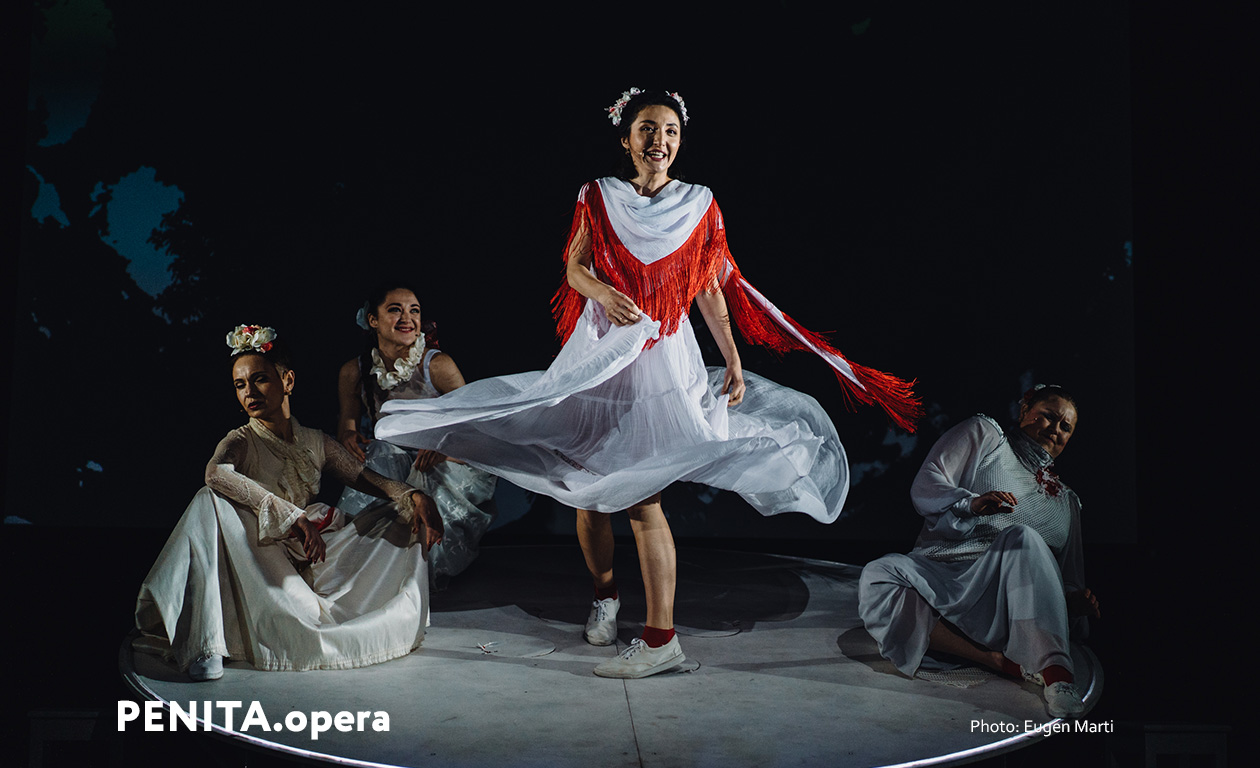
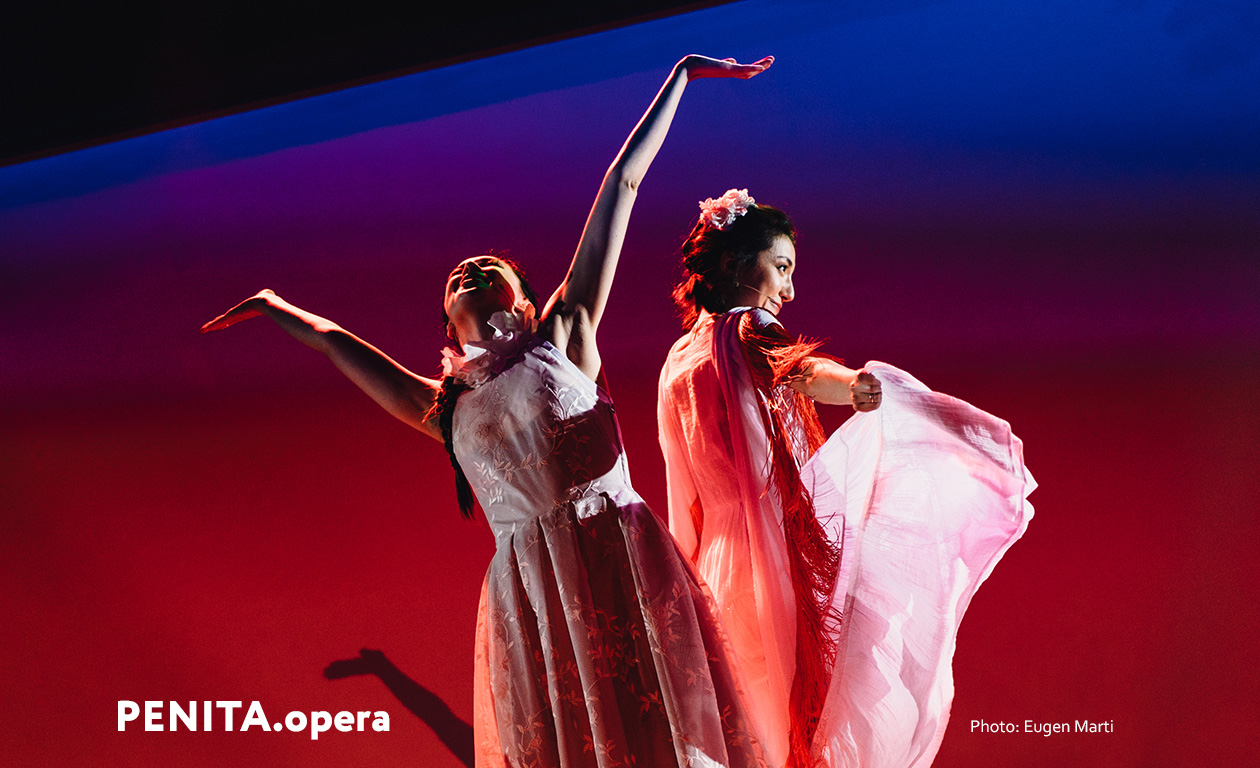
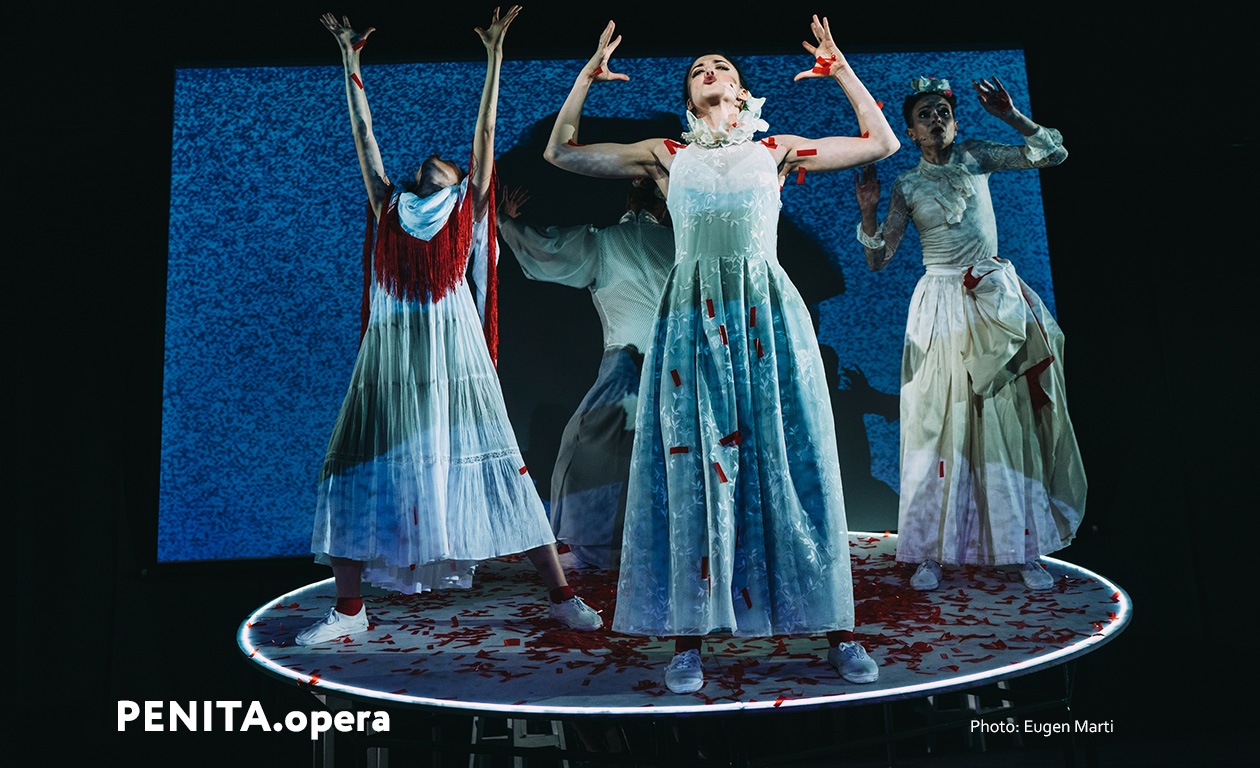
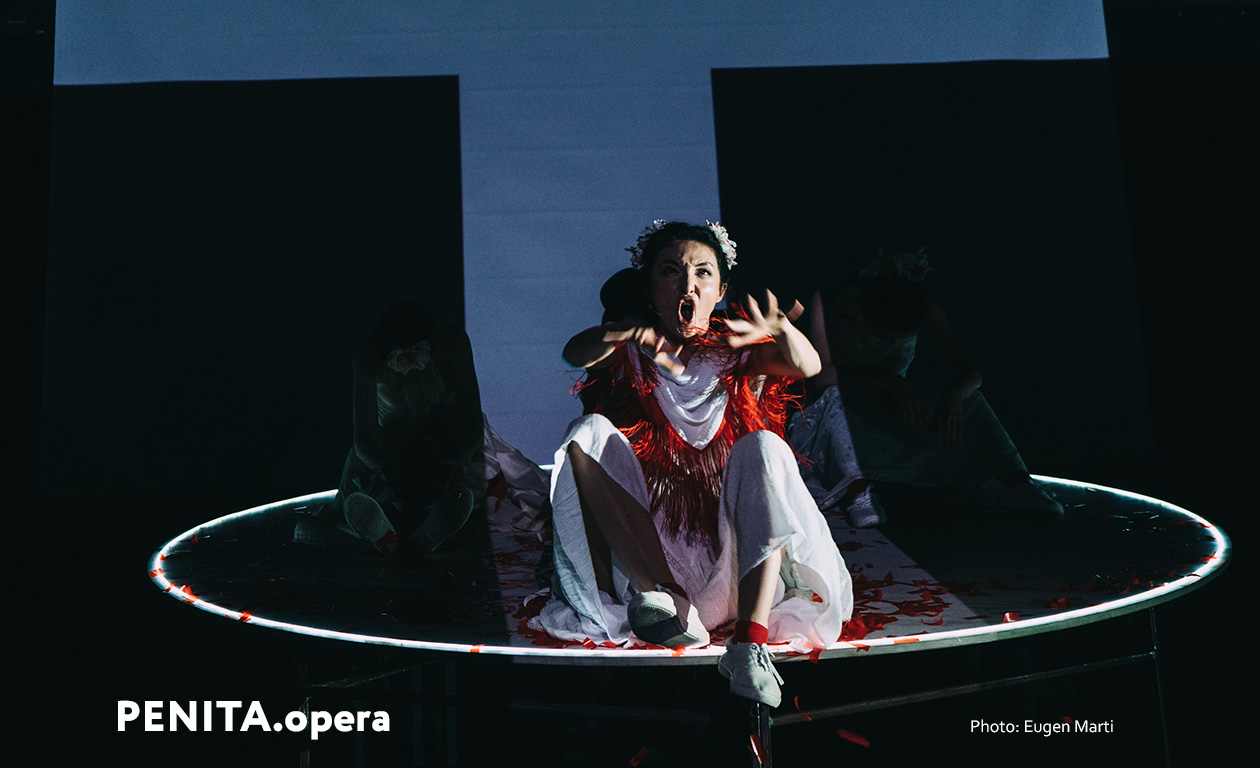
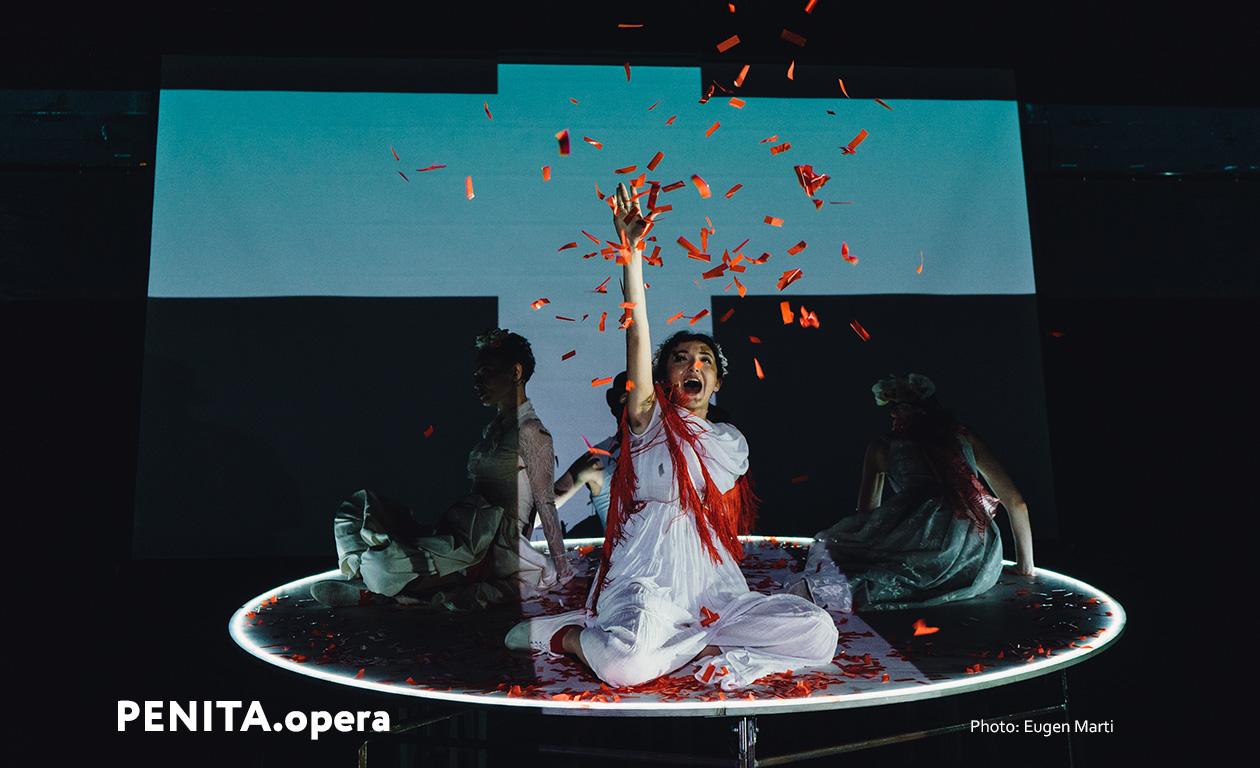
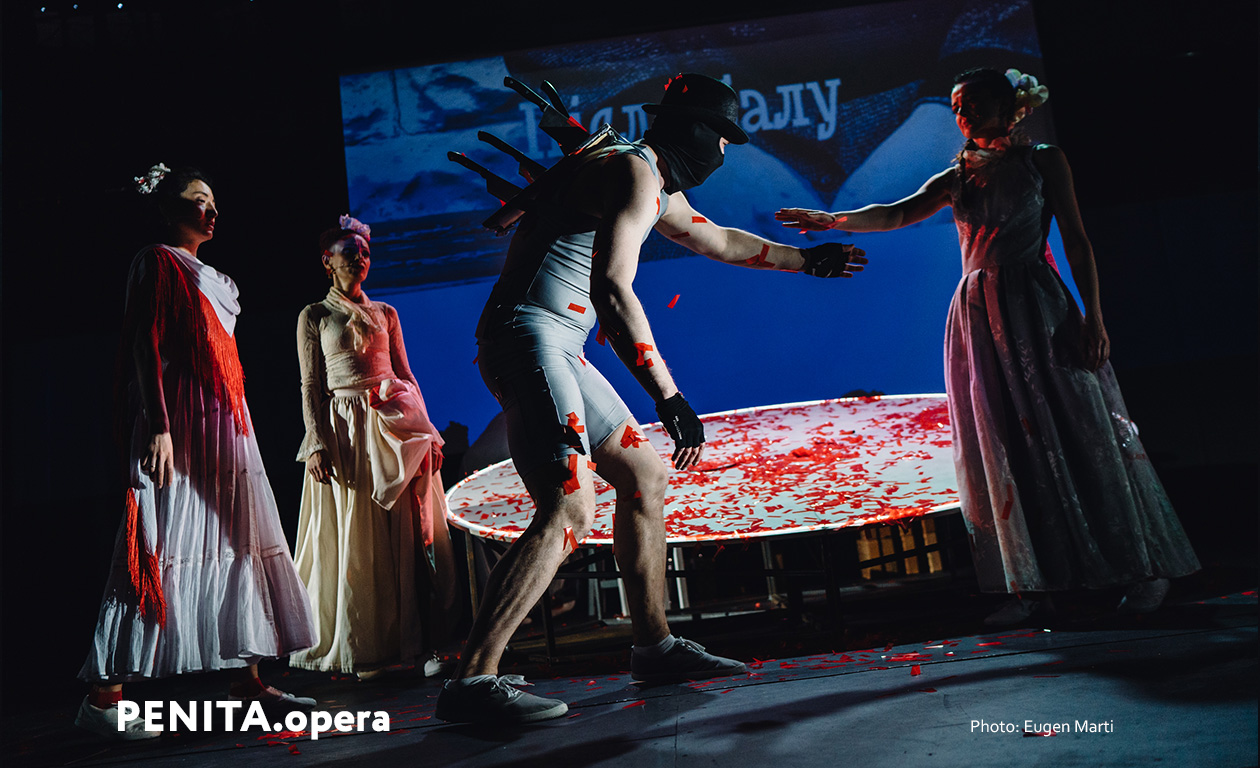
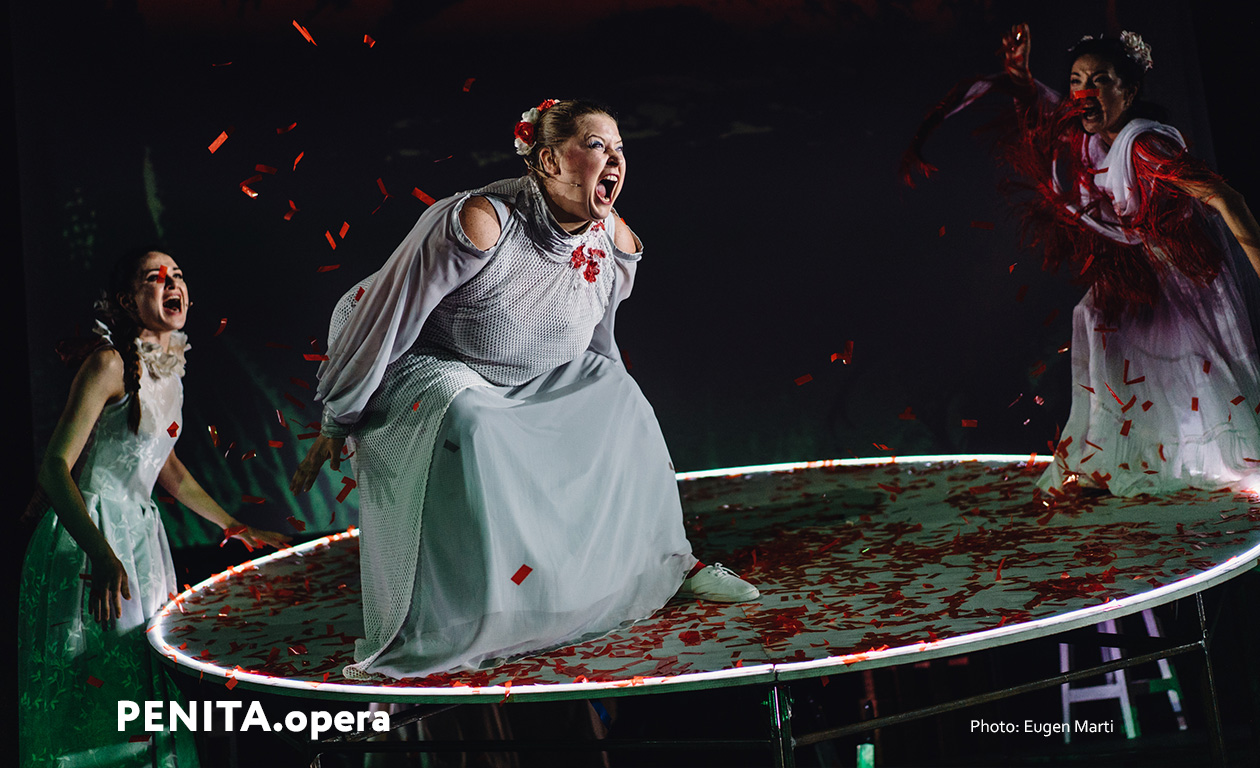
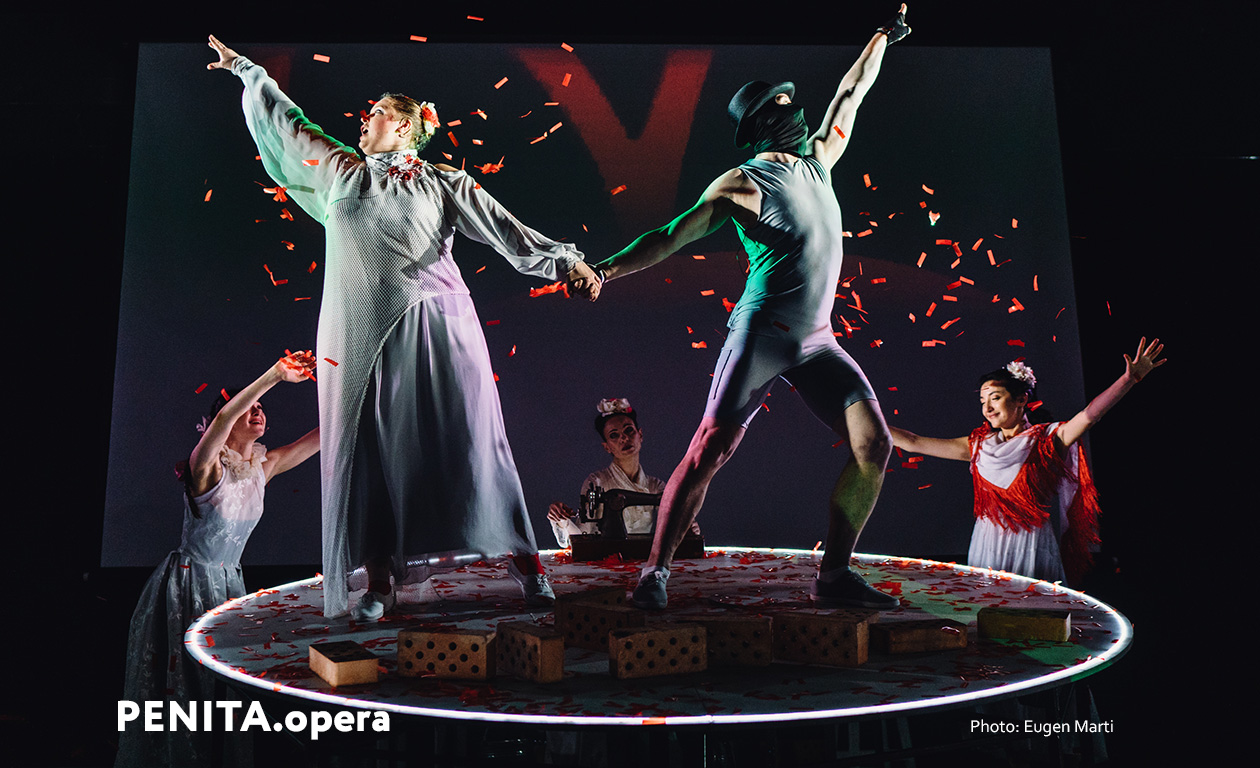
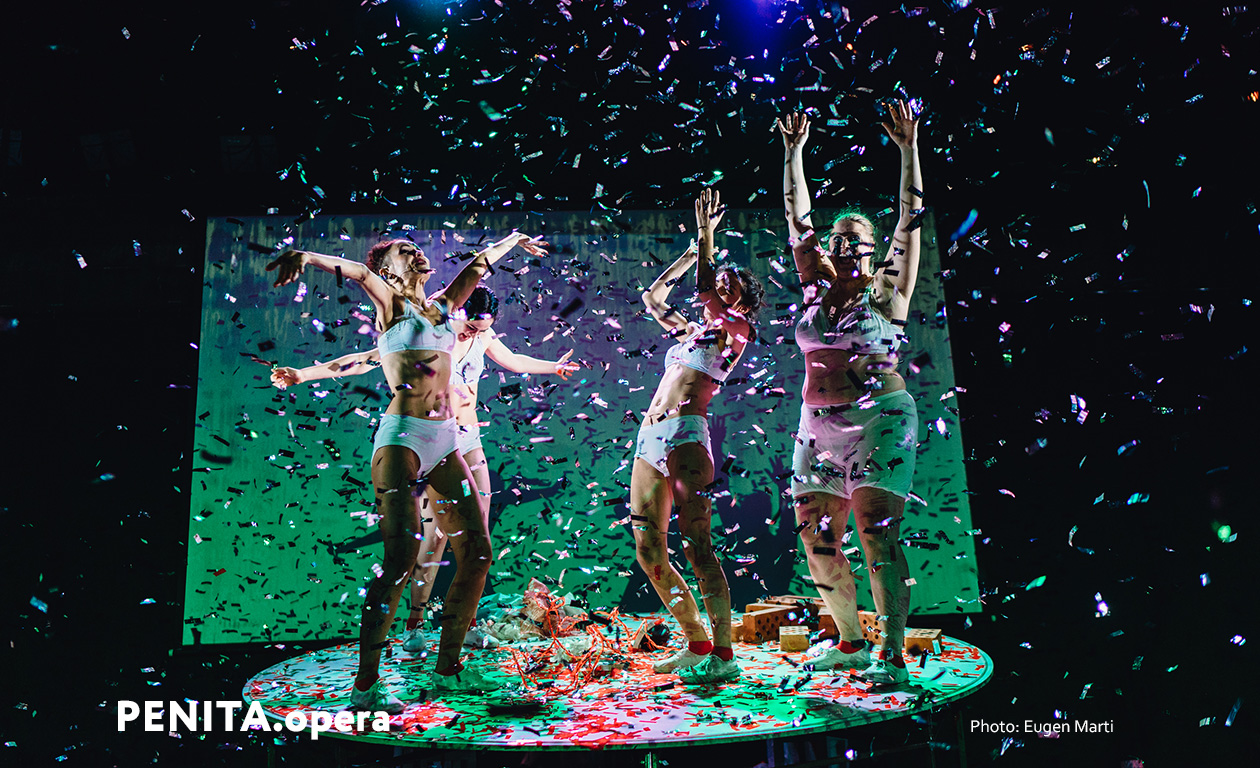
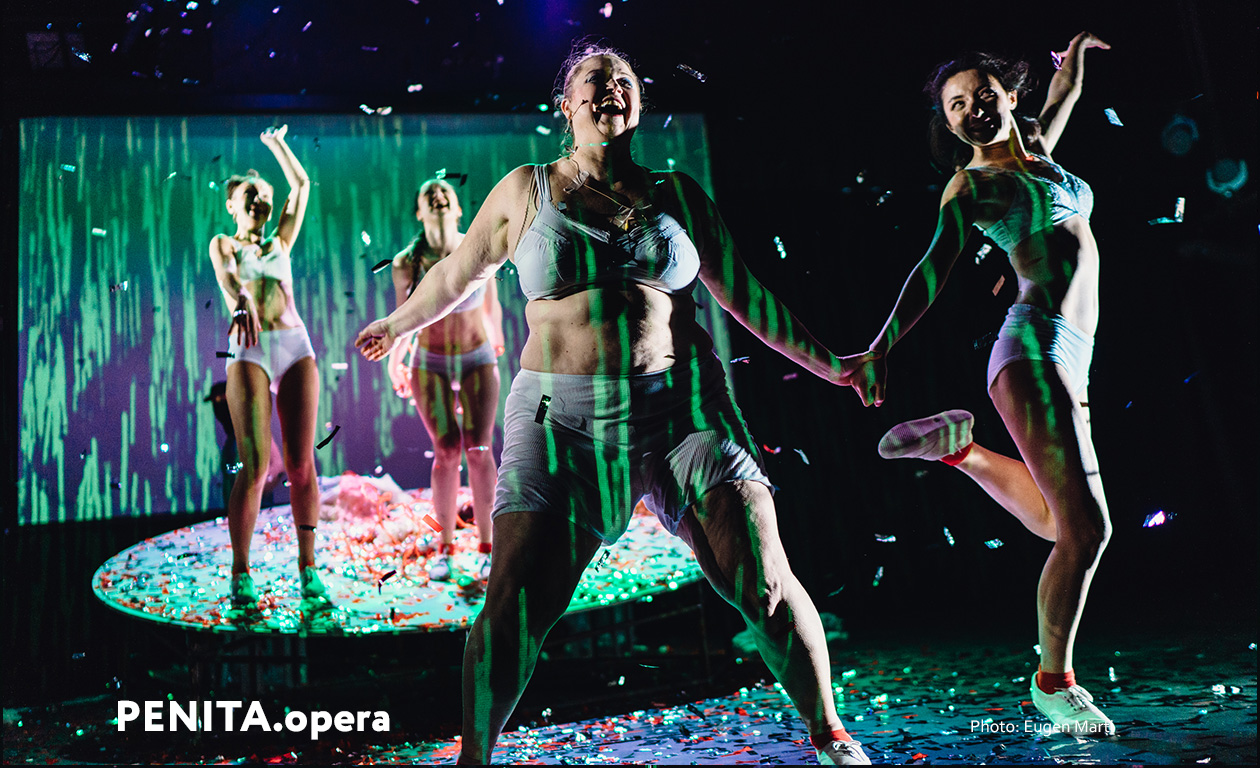
Four women, named after musical instruments, talk about a calm, stable life in a sanatorium. There is everything they need here but just boring.

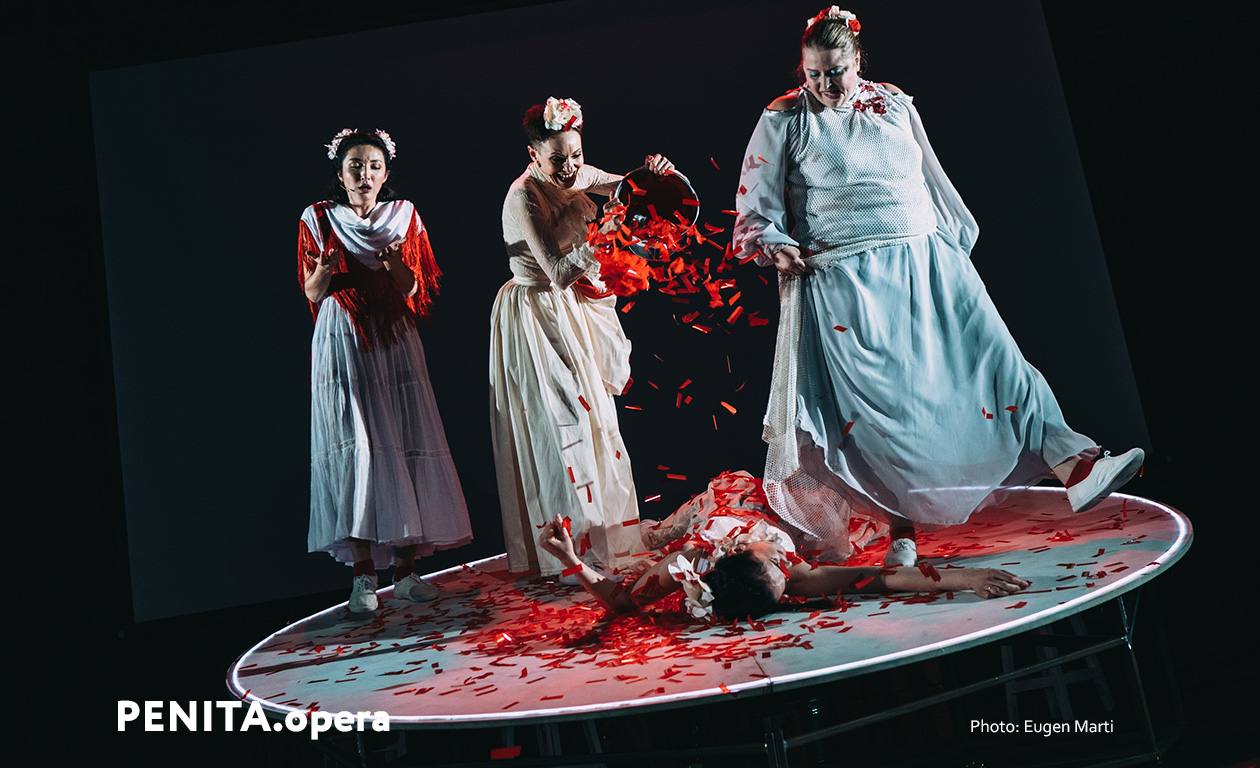
To entertain themselves the heroines talk about their life. Each woman has a different story, but all four have something in common – that brought them here – a murder.

The resort turns out to be a prison and the heroines – are prisoners sentenced to life imprisonment. They are doomed to spend the rest of their lives in a “zone within a zone”. If these women have hope and do they have a right to it?

The text of the libretto was based on interviews with life-sentenced women.

Characters: female – 4

Music for the libretto: Zoltan Almashi.

The play is translated into English and German.

IVAN FYODOROVYCH SHPON’KA AND THE RED SVYTKA (2021, 2022)

The text of the libretto is based on the plot of Gogol’s unfinished story. However, it includes references to the images of the entire cycle “Evenings on a Farm Near Dykanka”: a red svytka, an enchanted place, etc.

The action is transferred to the modern context: Russian soldier Shpon’ka, disappointed, returns from the war. But there is no peace even in his native village in the Urals: his auntie Vasilisa Kashporivna draws Shpon’ka into a conflict with neighbors, and somebody kills her…

Who committed the crime? Ukrainian farmer from the neighboring village near Poltava who had a land dispute with the auntie? Her worker who was oppressed by Vasilisa Kashporivna? Or perhaps aggressive green aliens that regularly visit the neighboring meadow and shout in Russian “Meadow is ours”?

This case is investigated by the Detective, who eventually finds out: the personification of absolute evil is the Red Svytka. It is bigger than all characters, the meadow or the villages. But how do win it? Shpon’ka tried to fight the system but appeared too weak to defeat it.

In the final of the play written on the 26th of February 2022, the documentary footage is used: Putin threatens to “decommunize” Ukraine and sends tanks and rockets there.

As for the genre of the play, tragedy, comedy, and farce merge here. Besides, there is a full-fledged procedural built in the best traditions of detectives.

Characters: male – 4, female – 2 + crowds